GBIC 2026 · Globalization Forum Successfully Held
2026全球商业创新大会·全球化专题论坛成功举办
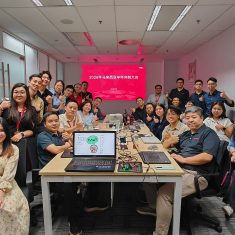
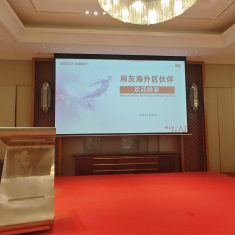
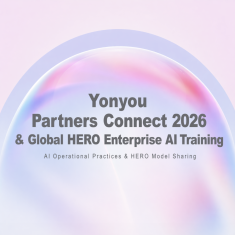
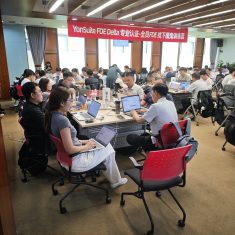
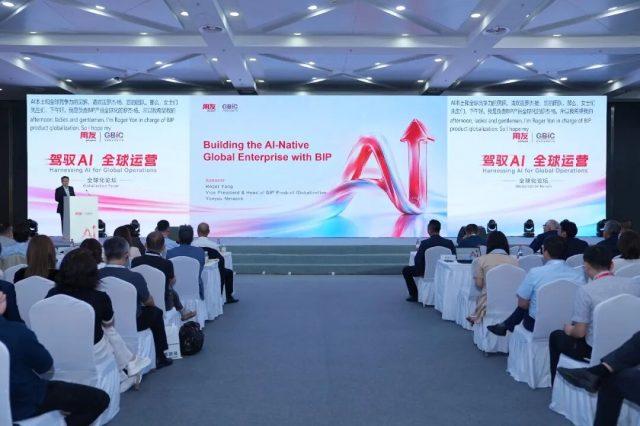
On the afternoon of August 7, the Globalization Forum of Global Business Innovation Conference 2026 (GBIC 2026) was successfully held at the Nanjing International Expo Center. As one of the core thematic forums of this year’s conference, the Globalization Forum, themed “Harnessing AI for Global Operations,” brought together business leaders, technology experts, and ecosystem partners from over 20 countries and regions including Hungary, Mexico, Singapore, Indonesia, Malaysia, Thailand, Vietnam, Hong Kong, Macao, and Taiwan, for in-depth discussions on the digital intelligence transformation path of enterprise global operations in the AI era.
8月7日下午,2026全球商业创新大会(GBIC·2026)全球化专题论坛在南京国际博览会议中心成功举办。作为本届大会核心专题论坛之一,全球化论坛以“驾驭AI 全球运营”为主题,汇聚来自匈牙利、墨西哥、新加坡、印尼、马来西亚、泰国、越南、港澳台等20余国家和地区的企业领袖、技术专家与生态伙伴,围绕AI时代企业全球化运营的数智化转型路径展开深入探讨。
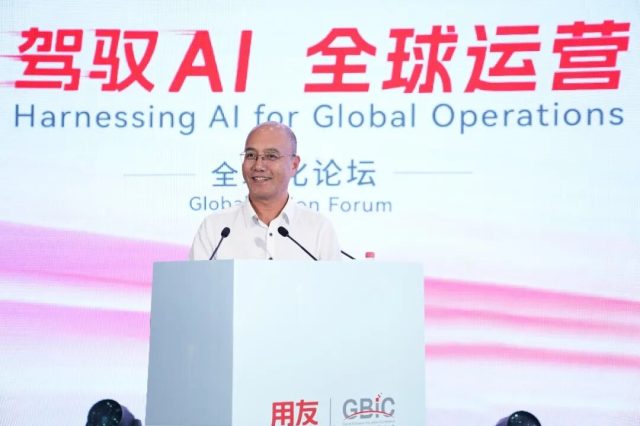
Jason Shen, Senior Vice President & President of Global Business, Yonyou Network, stated in his speech that enterprise AI is far more than technical upgrading; it represents systematic transformation of corporate operation modes, decision-making frameworks and growth logic. Centered on AI, YonBIP Platform delivers comprehensive upgrades covering core business scenarios including finance, human resources, supply chain and manufacturing, helping enterprises evolve from digital management to intelligent operations. Up to now, Yonyou has set up 14 overseas branches with over 200 partners, serving more than 2,300 enterprises across over 40 countries and regions. Its products support multi-language and multi-country localized suites, with overseas data centers deployed to meet clients’ compliance and data security requirements. To help global enterprises embrace AI, Yonyou is accelerating the global rollout of enterprise AI products, empowering partners and helping clients turn AI visions into tangible business value. Yonyou firmly believes global growth relies on robust ecosystem partnerships. Yonyou Global Business will continue to cooperate with worldwide partners, integrating technologies, local expertise and professional services to deliver better solutions for global enterprises.
用友网络高级副总裁、海外业务总裁 沈崇锋在致辞中表示,企业AI已不仅仅是技术升级,更是企业运营方式、决策模式与增长逻辑的系统性变革。用友BIP平台正以AI为核心,从财务、人力、供应链、制造等核心业务场景全面升级,助力企业从数字化管理迈向智能化运营。目前,用友已在海外设立14个分支机构,拥有超过200家合作伙伴,服务覆盖40余个国家和地区的2300多家企业客户,产品支持多语言、多国别本地化套件,并在海外部署数据中心以满足客户合规与数据安全需求。为了帮助全球企业拥抱AI,用友正加速在全球部署企业AI产品,携手合作伙伴,助力客户将AI构想转化为真实的商业价值。用友坚信,全球增长离不开强大的生态伙伴关系。用友海外将继续与全球伙伴携手,融合技术、本地经验与专业服务,为全球企业提供更好的解决方案。
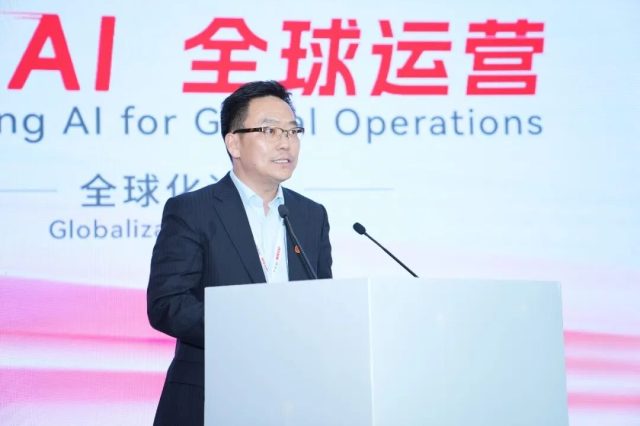
Roger Yang, Vice President & General Manager of BIP Product Globalization, Yonyou Network, pointed out in his sharing that enterprises of the future must possess three core capabilities: global design, AI-native architecture and localized compliance.Citing statistics, he mentioned that 172 countries worldwide have enacted data privacy laws. Corporate compliance has shifted from post-event reporting to real-time transaction compliance, and localization capabilities must be natively embedded at the platform’s core rather than added as an afterthought. Built on the core architecture of “one platform, unified data foundation, multi-country adaptation and multi-agent collaboration”, YonBIP has launched localized editions supporting 13 mainstream languages for multiple key countries and regions, covering high-frequency compliance scenarios such as finance, tax and HR. Powered by AI agents for global electronic invoices and other applications, cross-border tax document processing has been upgraded from manual work to natural language-driven automated workflows. Roger Yang put forward three actionable suggestions for enterprises’ globalization and AI adoption: standardize core corporate systems to lay a foundation for further innovation; accelerate the rollout of localized systems in operating countries; activate enterprise AI and expand AI applications step by step.
用友网络副总裁、BIP产品全球化总经理 杨继浩在分享中指出,未来企业必须具备“全球化设计、智能化原生、本地化合规”三大核心能力。他援引数据称,全球172个国家已建立数据隐私相关法律,企业合规正从事后报告走向实时交易合规,本地化能力必须从平台底层“原生内置”而非后期附加。用友BIP以“一个平台、一套数据底座、多国别适配、多智能体协同”为核心架构,目前已在13种主流语言、多个重点国家与地区推出本地化版本,覆盖财务、税务、人力资源等高频合规场景,并通过全球电子发票智能体等AI应用,将跨国税票处理从人工操作升级为自然语言驱动的自动化流程。在企业全球化和AI应用方面,杨继浩给出三个行动建议:实现企业核心系统标准化,建立进一步创新的基础;加速企业所在国家的本地化系统采用;激活企业AI并逐步扩展AI应用。
During the industry practice sharing session, multiple guests shared first-hand experience from their respective sectors.
在行业实践分享环节,多位嘉宾带来了各自领域的一线经验:
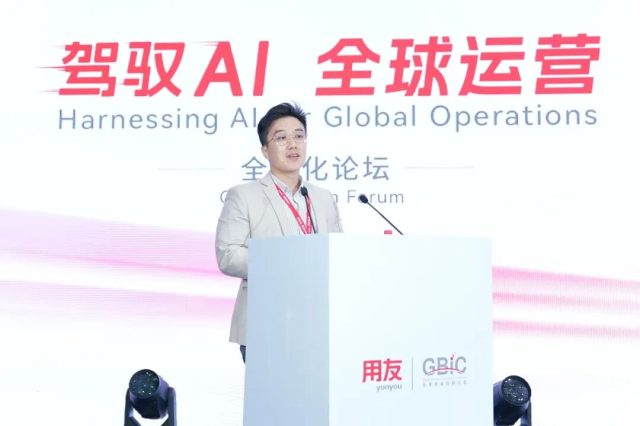
Goh Wei Khan, General Manager of Oriental Sheet Piling, shared insights on traditional industries embracing AI. He drew an analogy: data is the root system of a tree, while AI represents its branches, leaves and fruits. He emphasized that enterprise management systems serve as business infrastructure, and the value of AI hinges on whether data is accurately captured, consistently managed and trusted by all staff. He argued that the biggest challenge of corporate digital intelligence transformation lies not in software itself, but the shift of mindsets across the organization: from management to frontline staff, everyone must build shared trust in data.
Oriental Sheet Piling总经理 Goh Wei Khan分享了传统行业拥抱AI的思考。他用“数据是树的根系、AI是树的枝叶与果实”比喻二者关系,强调企业管理系统是企业的业务基础设施,AI的价值取决于数据是否被准确捕获、一致管理并获得全员信赖。他认为,企业数智化转型最难的并非软件本身,而是组织内部人员思维方式的转变——从管理层到一线员工,都需要建立对数据的共同信任。
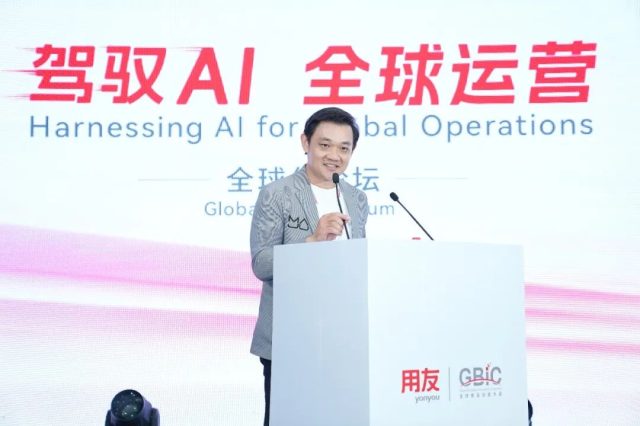
AMIN CAHYADI, CEO of MAJU HARDWARE, shared the Indonesian retailer’s expansion journey from a single store to more than 60 stores with over 600 employees. He noted that rapid growth also brought greater operational complexity: inconsistent inventory data and siloed systems left him having to play “detective” just to track down inventory. With support from Yonyou, MAJU HARDWARE achieved end-to-end data integration across retail, supply chain, finance and tax, transforming the reality of a CEO having to track down inventory into one where data speaks for itself and delivers actionable insights.
印尼MAJU HARDWARE CEO AMIN CAHYADI介绍了从1家门店到60多家门店、600多名员工的零售扩张历程。他表示,增长带来复杂性——库存数据不一致、系统信息孤岛让CEO成了“到处找货的侦探”。用友帮助其实现了零售、供应链、财务、税务的端到端数据贯通,让“从CEO做侦探找货,到数据自己说话”成为现实。
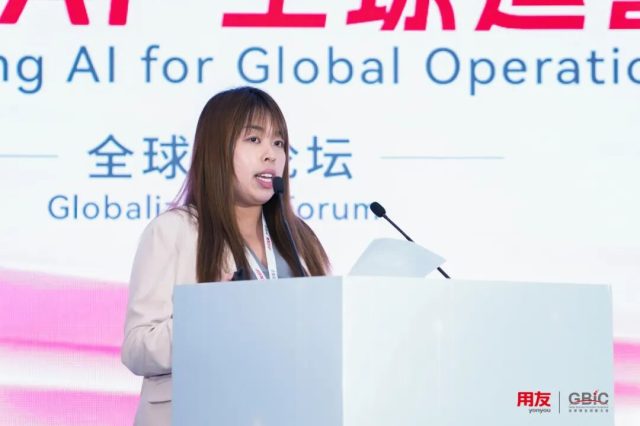
Kelly Wong, Marketing Director of Stamford Tyres from Singapore, shared the company’s transformation journey from fragmented systems to a unified platform. Faced with operational challenges across multiple business segments including retail, warehousing, wholesale and fleet management, Stamford Tyres rolled out digitalization in three phases with Yonyou YonSuite: stabilizing core systems, upgrading CRM and membership management, and expanding omni-channel digital capabilities. She specifically mentioned that the efficiency of the fault reporting process has increased by approximately 40%, and the enterprise will introduce more AI features in the future to deliver personalized customer services and intelligent workflows for employees
新加坡Stamford Tyres营销总监Kelly Wong分享了从分散系统到统一平台的转型路径。面对零售、仓储、批发、车队等多业态运营挑战,Stamford Tyres通过用友YonSuite分三阶段推进数字化建设:核心系统稳定化、CRM与会员管理升级、全渠道数字化拓展。她特别提到,故障提报流程效率已提升约40%,未来将引入更多AI功能以实现客户服务的个性化和员工工作的智能化。
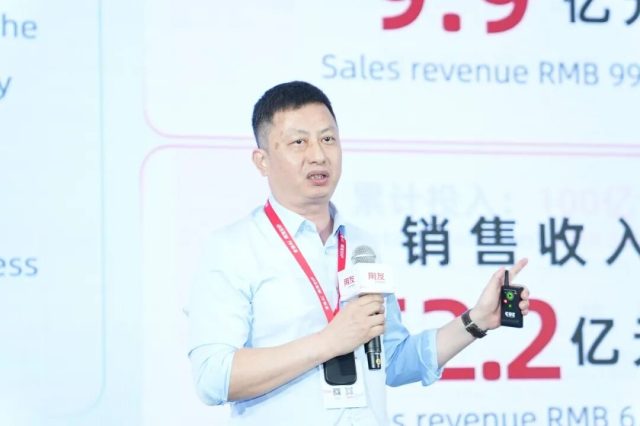
Wang Xin, CIO of Youngor Group, shared the practical AI deployment at the group’s apparel retail terminals. By collecting frontline sales associates’ communication scripts via smart devices and matching sales receipts with member labels through AI analytics, Youngor built a closed-loop system covering intelligent coaching, script optimization and HR competency evaluation. The training and assessment of its 13,000 nationwide sales staff has shifted from manual supervision to AI-enabled empowerment. He stressed that AI is not a panacea, but a tool that solves individual on-site pain points and gradually evolves into core corporate capabilities.
雅戈尔集团CIO 王歆分享了AI在服装零售终端的具体落地。通过智能硬件采集一线导购话术,结合AI分析绑定销售小票与会员标签,雅戈尔构建了从智能陪练、话术优化到HR能力评估的闭环系统,全国13000名导购的训练与评价实现了从“人管人”到“AI赋能人”的转变。他强调,AI不是救世主,而是解决一个个现场小问题并最终成为企业能力的工具。
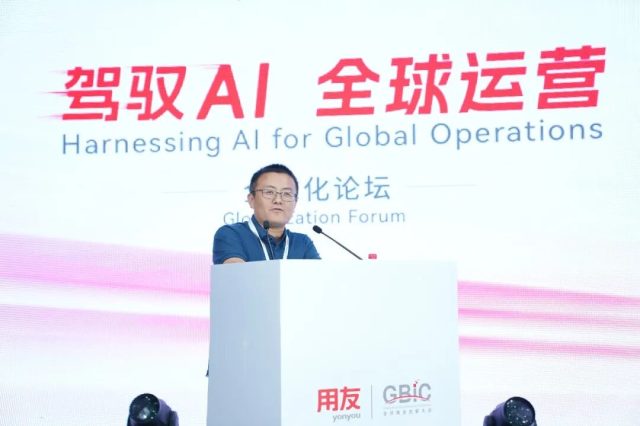
Wu Zhenjian, IT Director, DMEGC Magnetics Co., Ltd., summarized core principles from overseas expansion practices: “Enter global markets or be eliminated, yet we must guard against risks the moment we go overseas.” He highlighted that geopolitical risks and business environments are critical factors for overseas site selection, and strategic choices outweigh sheer efforts. Meanwhile, digital construction must be built on the bottom line of “eliminating human reliance”, with rigid system workflows to guarantee accurate and secure supply chain operations. He also pointed out that the internet revolution spanned 20 years, while the AI revolution may complete its evolution within a decade; no industry can afford to ignore AI in the future.
横店东磁信息总监 吴振健总结了出海实战中的核心原则:“不出海就出局,但更关注一出海就出事。”他强调,地缘政治风险与营商环境是全球化选址的关键变量,选择大于努力;而数字化建设须以“不要考验人性”为底线,通过系统流程的刚性约束保障供应链准确与安全。他同时指出,互联网革命走了20年,AI革命或许10年内就走完了,未来没有不用AI的行业。
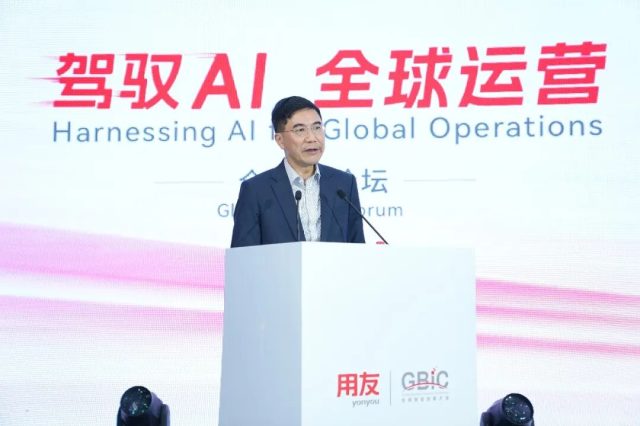
Denis Yip, President and Group Chief Operating Officer of HKBN (Hong Kong), stated that AI is reshaping demands for networks and computing power. Over the past six to seven months, HKBN’s AI-related business surged by 200% and GPU infrastructure expanded fivefold, with corporate demand for high-speed networks upgrading from 1G to 2.5G and above. He mentioned the industry is transitioning from Generative AI to Agentic AI, where AI agents can autonomously execute tasks instead of merely retrieving information. Yonyou and HKBN are jointly building an all-in-one enterprise AI service platform based on the “Network + AI + Computing Power” model.
香港宽频集团总裁及营运总裁 叶成辉指出,AI正在重塑网络与算力需求。过去6至7个月,香港宽频AI相关业务增长200%,GPU基础设施增长5倍,企业对高速网络的需求从1G向2.5G及以上跃升。他提出,行业正从Gen AI进入Agentic AI时代,AI代理不仅帮助用户搜索信息,更能自主执行任务。用友与香港宽频正基于“网络+AI+算力”模式,共同打造一站式企业AI服务平台。
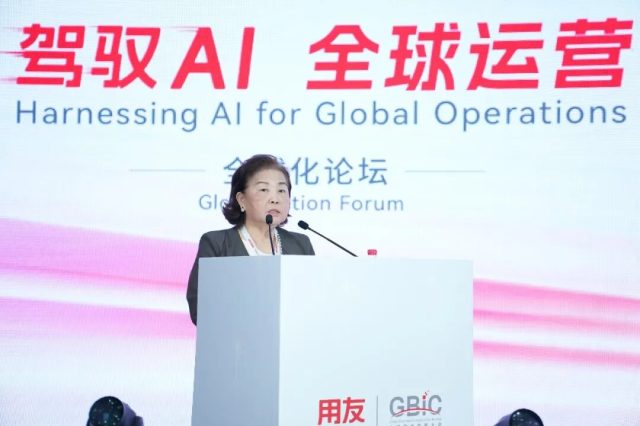
Sengdao BOUPHAKONEKHAM, Vice Chairman and CEO of Phongsavanh Group Co., Ltd., said the group chose Yonyou as its digital intelligence transformation partner not merely for a software suite, but for a strategic path to become an intelligent enterprise. She introduced that the group covers 43 business segments including agriculture, banking & finance, logistics, real estate and infrastructure. It expects to realize full industrial chain digital collaboration via YonBIP and contribute to Laos’ digital economy development.
老挝Phongsavanh Group副主席兼CEO Sengdao BOUPHAKONEKHAM表示,集团选择用友作为数智化转型伙伴,不仅是选择一套软件,更是选择成为“智慧企业”的战略路径。她介绍,Phongsavanh Group涵盖农业、银行金融、物流、房地产、基础设施等43个业务单元,期待通过用友BIP实现全业务链的数字化协同,为老挝数字经济发展贡献力量。
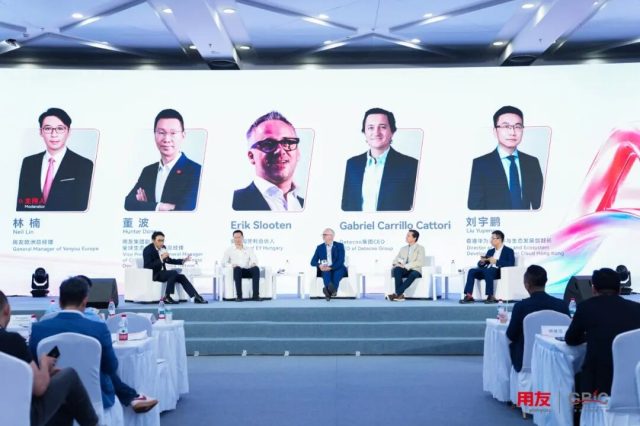
During the roundtable session, Neil Lin, General Manager of Yonyou Europe, acted as the moderator and conducted in-depth discussions with four guests centered around three major topics: AI Readiness, Data Compliance and Global Ecosystem.
在圆桌对话环节,用友欧洲总经理 林楠担任主持人,围绕“AI就绪、数据合规与全球化生态”三大议题,与四位嘉宾展开深度对话。
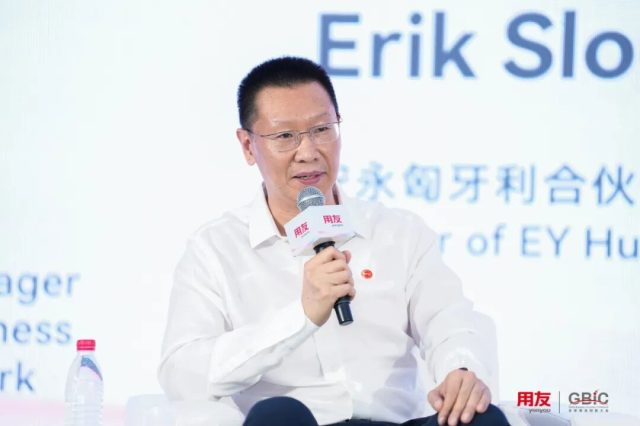
Hunter Dong, Vice President & General Manager of Global Ecosystem and Business Developement, Yonyou Network.Hunter Dong pointed out there is no “perfect timing” in the AI era. Enterprises should boldly pilot AI applications across every link of the value chain, including R&D, warehousing, manufacturing and transactions. He also reminded that the biggest challenge for Chinese tech companies going global lies in long-term commitment. Sustained long-term investment, as exemplified by Huawei and BYD, is essential for steady, far-reaching development.
用友集团副总裁、全球生态合作本部总经理 董波指出,AI时代不存在“完美时机”,企业应从价值链的每一个环节——研发、仓储、制造、交易——大胆尝试AI应用。他同时提醒,中国科技企业出海的最大挑战在于长期承诺,须像华为、比亚迪一样坚持长期投入,方能行稳致远。
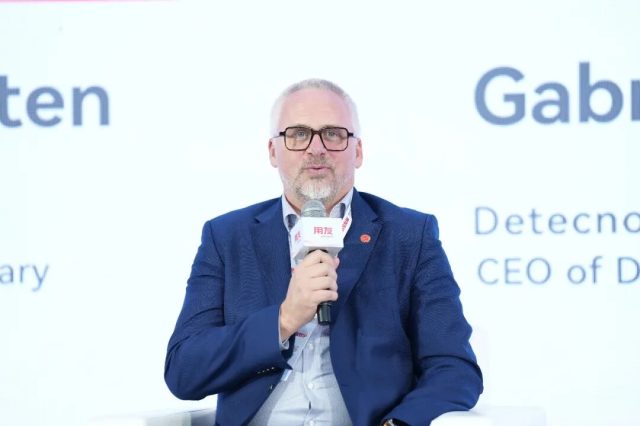
From a European perspective, Erik Slooten, Partner of EY Hungary, introduced the EU AI Act which entered fully into force starting August. He emphasized that AI has evolved from an information tool to a participant in decision-making, and enterprises must transparently record AI’s decision logic and data usage trails. His core advice: “Growth matters, but it must be achieved in a robust and protected manner.”
安永匈牙利合伙人 Erik Slooten从欧洲视角出发,介绍了欧盟自8月起全面生效的AI合规法案。他强调,AI正从信息工具变为决策参与者,企业必须透明记录AI的决策逻辑与数据使用路径。他的核心建议是:“成长很重要,但要以强大且受保护的方式去成长。”

Gabriel Carrillo Cattori, CEO of Detecno Group, shared insights from the Latin American market perspective. He noted that 99% of enterprises in Latin America are SMEs with high price sensitivity. Dominance of US tech players means Chinese AI solutions must first build local trust. He argued that most failed AI projects stem not from technical shortcomings, but insufficient readiness in leadership, data and staff discipline. “Before investing in AI, invest in AI readiness.”
Detecno集团CEO Gabriel Carrillo Cattori从拉美市场视角分享观点。他指出,拉美99%的企业是中小企业,价格敏感度高,而美国科技公司的市场话语权使得“中国AI需要先建立信任”。他认为,大多数AI项目失败,并非源于技术短板,而是管理层认知准备不足、数据基础薄弱以及人员执行力欠缺。“投资AI之前,先投资于‘为AI做好准备’。”
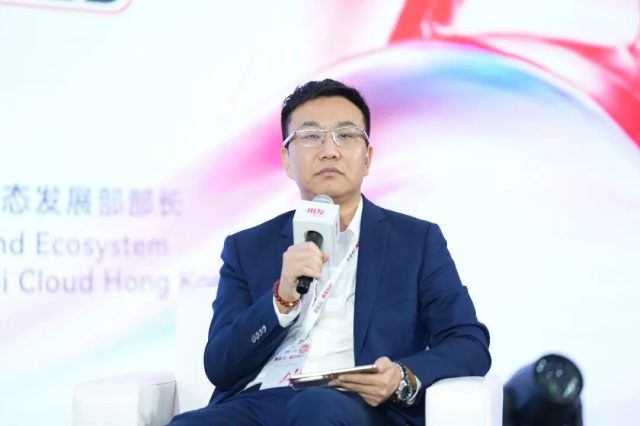
Drawing on Huawei’s 30 years of global operation experience, Liu Yupeng, Director of Partner and Ecosystem Development, Huawei Cloud Hong Kong, put forward five core principles: adhere to long-term strategies, implement localized operations, prioritize compliance, co-build partner ecosystems, and consolidate computing infrastructure. He stressed that globalization cannot be achieved by standalone players; win-win results can only be delivered through partnership collaboration.
香港华为云伙伴与生态发展部部长 刘宇鹏结合华为30年全球化经验,提出五项核心原则:坚持长期战略、践行本地化运营、合规优先、共建伙伴生态、筑牢算力底座。他强调,全球化没有孤胆英雄,唯有携手伙伴才能共赢。
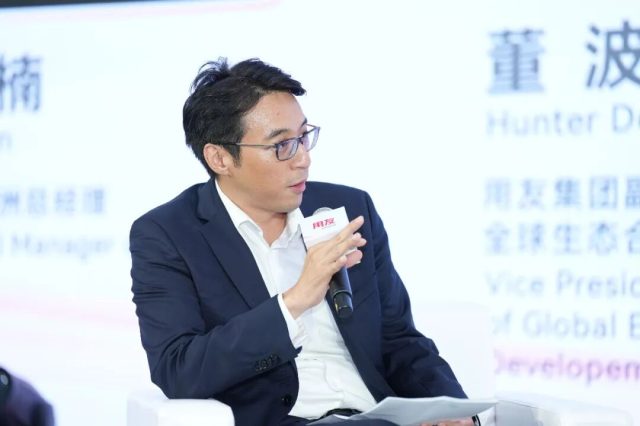
In closing remarks, Moderator Neil Lin stated that global operations in the AI era require close collaboration among AI consulting, enterprise software, implementation partners and cloud infrastructure. Only by taking action and embracing AI without delay can enterprises seize opportunities amid fierce global competition.
林楠在总结中表示,AI时代全球化运营需要AI咨询、企业软件、实施伙伴与云基础设施的紧密协同,唯有“行动起来,拥抱AI,不要等待”,才能在激烈的国际竞争中赢得先机。
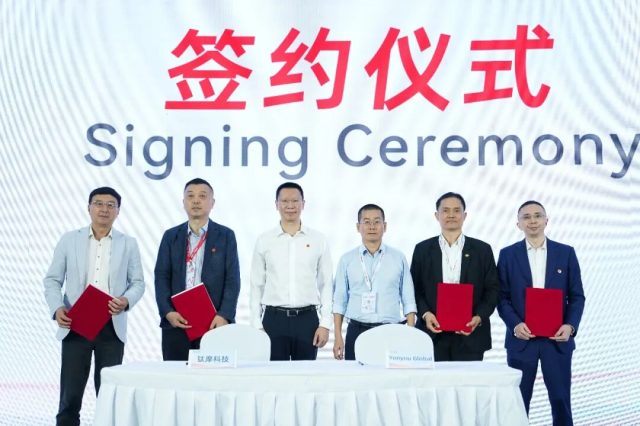
During the forum, Yonyou Global Business signed separate strategic cooperation agreements with Hong Kong Timor Information Technology and Phongsavanh Group.
论坛期间,用友海外与香港钛摩信息科技、Phongsavanh集团分别签署战略合作协议。
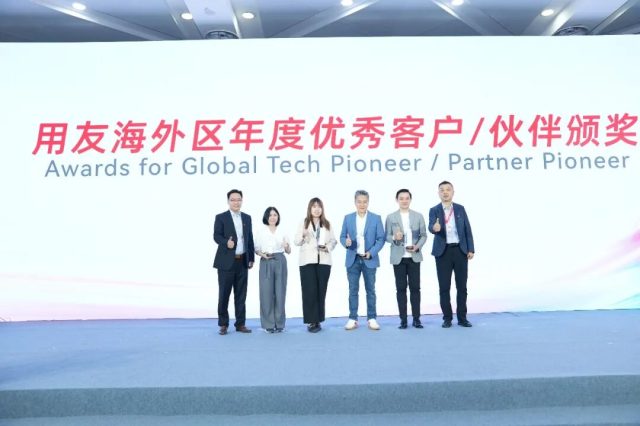
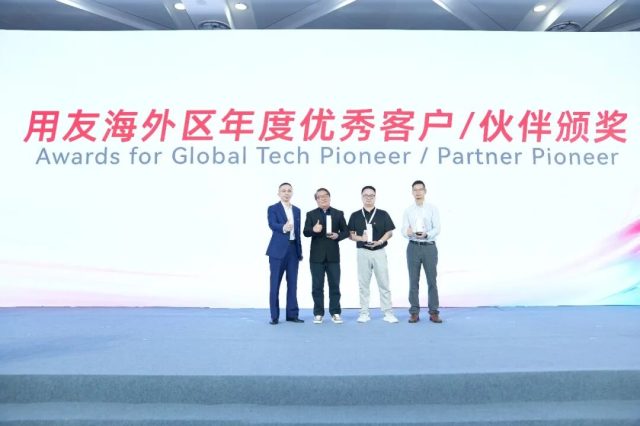
On-site, Yonyou Global Business presented awards for Outstanding Digital Intelligence Enterprise and Outstanding Digital Intelligence Partner to the year’s top clients and partners.
现场,用友海外还向年度优秀客户企业及伙伴颁发了 数智运营卓越企业、数智运营卓越伙伴奖项。
The holding of this Globalization Forum marks a new milestone for Yonyou in deeply integrating AI with services for enterprises’ global operations.Going forward, Yonyou will continue to cooperate with global partners, taking YonBIP enterprise AI platform as the foundation, and help more enterprises achieve intelligent growth across global markets.
本届全球化专题论坛的举办,标志着用友在服务企业全球化运营与AI深度融合方面迈出了新步伐。未来,用友将继续携手全球伙伴,以BIP企业AI平台为底座,助力更多企业在全球市场中实现智能化增长。