The car of the future will be interconnected—not only monitoring its own parts and the safety status of its surroundings in real time, but also communicating with other vehicles and increasingly intelligent road infrastructure. These features will come standard in all cars, and they may look less like a few metal boxes and more like a complex of technological devices, high-yield data centres or even part of a larger mobile network. As every car becomes the source of receiving and sending digital information, over millions of iterations, safety and efficiency will improve, while automakers will be able to capture valuable data. The vast majority of advances in modern transportation have benefited from innovations in electronics. Today, the average number of codes in a high-end sedan is nearly seven times that of a Boeing 787.
Digital technology has also brought about changes in the economic model of the automotive industry. Over the past few decades, automakers’ cost-reduction efforts have focused on mechanical and performance-oriented features such as power and gadgets in an attempt to improve cost returns. But the pattern is changing; in the United States, compression has become the norm as requirements for emissions and safety continue to escalate. At the same time, consumers don’t have to pay more for these features than they did 10 years ago.
In a context where regulatory and competitive pressures are unlikely to abate, the transition from mechanical to solid-state systems will present new opportunities for automakers to improve economic efficiency. The ability to analyze real-time road data can improve sales and marketing efficiency. Digital design and production can dramatically increase productivity: big data simulation and virtual modeling can reduce development costs and accelerate time-to-market. For consumers who are accustomed to the speed of innovation in consumer electronics (such as smartphones), this is right up their alley.
How should large enterprises transform?
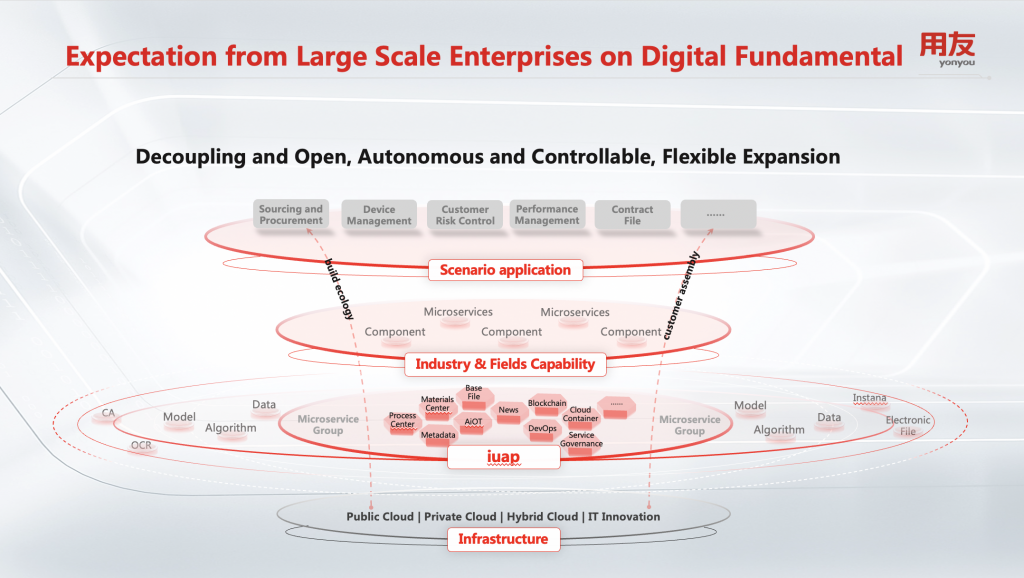
In the digital intelligence transformation of large enterprises, building a digital intelligence platform is the top priority. YonyouBIP’s PaaS platform iuap, as the fundamental of digital intelligence, takes cloud native, data intelligence driven, technology inclusive and socialized architecture as the core, and realizes the leap-forward upgrade of PaaS platform from enterprise level to social level.
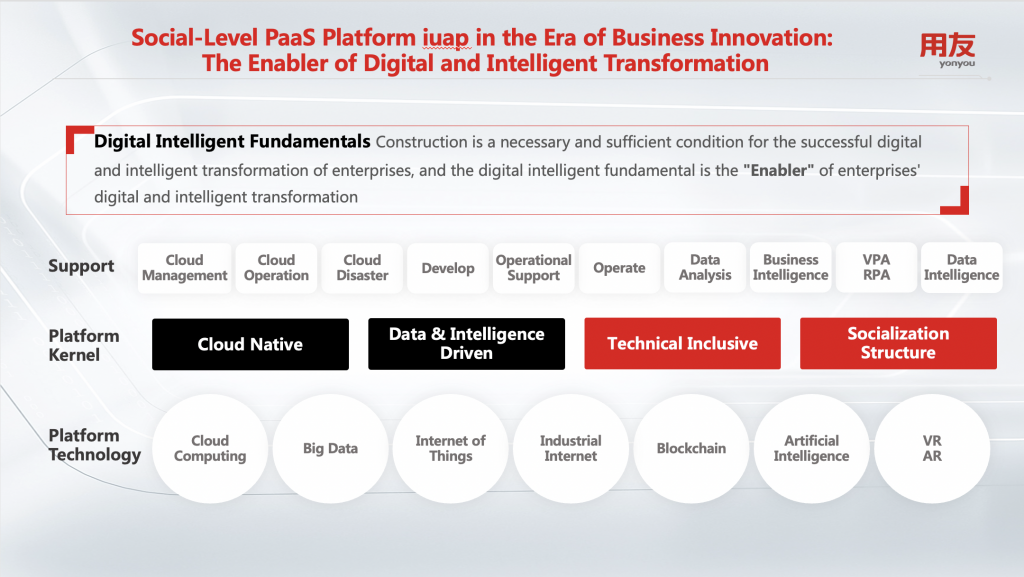
Yonyou iuap redefines the PaaS platform through a number of industry-first technological breakthroughs such as YMS cloud middleware, multi-tenant and multi-data center, social business architecture breakthrough and scenario-based digital intelligence application breakthrough, becoming a new fundamental for enterprise digital intelligence. Provide large enterprises with solid digital intelligence platform support, as well as complex applications for agile development, helping more enterprises to become world-class.
Since inception, Yonyou has focused on building independent research and development capabilities. The genes of technological innovation are passed down from generation to generation, creating countless firsts and leading every era of industry development. In 2014, Yonyou iuap launched the first pure cloud-native PaaS platform in China, which completely adopts the micro-service architecture development, operation and maintenance integration, public cloud first, and then the method of rapid exclusive privatization. Yonyou is the first and only manufacturer that fully implements Internet-based cloud computing technology into the enterprise service field and successfully realizes agile engineering from public cloud to private cloud.
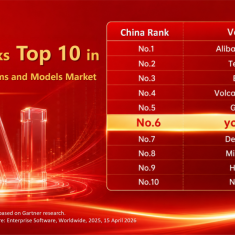
According to the report of Gartner, a global information technology research and consulting company, Yonyou is the only Asia-Pacific vendor in the global Enterprise Resource Planning (ERP) TOP10, and ranks first among Asia-Pacific vendors in the global ERP SaaS market. At the same time, according to a report by IDC, a global IT market research organization, Yonyou has ranked first in China’s aPaaS market share and China’s enterprise application SaaS market share for consequtive years, with a market share of 14.4%.
Yonyou iuap will continue to play the leading edge of the social-level PaaS platform to help enterprises build a digital intelligence fundamental. With advanced cloud-native technology, social architecture, and rich data-intelligence application scenarios, localized value substitution is realized. Help large enterprises to digitally transform and innovate business!
Customer case
Digital Transformation of Successful Companies: China FAW
Yonyou & FAW QiMing: Use digital technology to precipitate China FAW’s management innovation and business practices, create digital products and solutions covering the entire value chain of the automotive industry, and help build an automotive powerhouse.
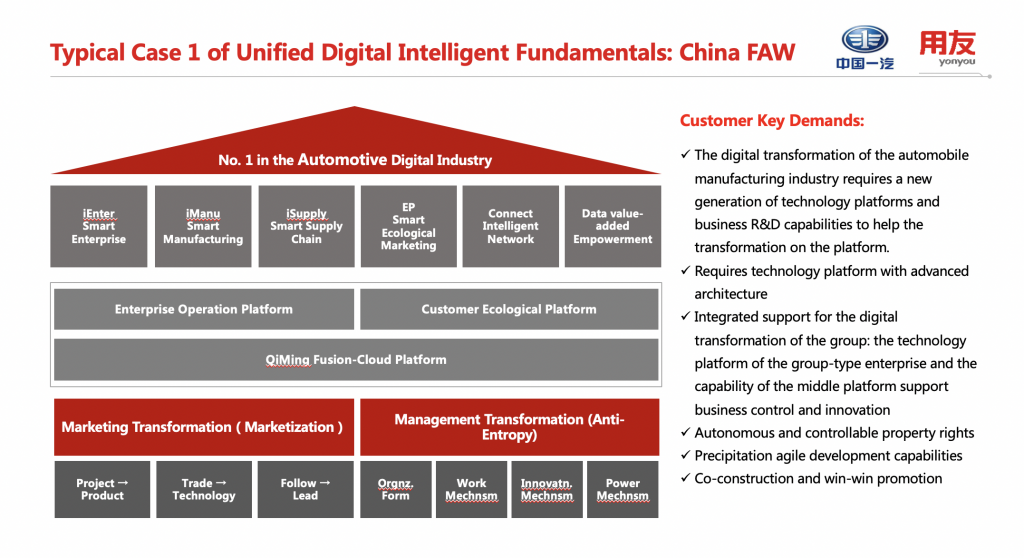
Yonyou NC Cloud data intelligence, build a data-driven intelligent operation model
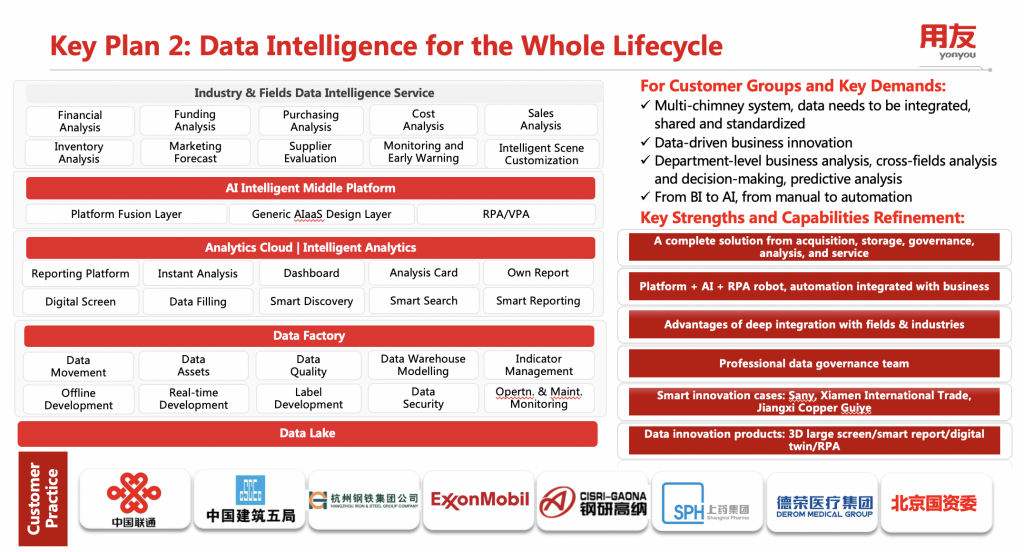
A notable feature of the traditional ERP era is process driven. Entering the era of digital intelligence, the operation and management mode of enterprises must be transformed from process driven to data driven, and data surpassing processes has become the new core of operations; enterprise operations have shifted from business process informatization to comprehensive automation, intelligence, intelligent management, and intelligent operation have become the basic needs of enterprise management.
Yonyou NC Cloud data intelligence is a pioneering product that helps enterprises realize data exploration and digital transformation. The product connects NC Cloud’s internal business data and social data, through big data, AI algorithms, operations research algorithms, etc., realize enterprise customers mining of data value chain, help enterprises implement data decision making or data-driven business models in different business scenarios.
NC Cloud can use big data technology to help customers evaluate whether the existing supply chain network layout is reasonable, provide optimal warehouse location and supply flow optimization suggestions, and support the comparison of optimal cost and timeliness under different networking modes.
The current development trend of the automobile industry makes digital and intelligent software products more and more prominent in supporting and empowering the industry. In recent years, China’s automobile industry has made remarkable achievements around the “new four modernizations”.
In terms of electrification, sales of new energy vehicles have grown rapidly; in terms of networking, car companies have launched models with IoV (Internet of Vehicle) functions to provide users with a variety of IoV solutions; in terms of intelligence, more and more OEMs and Technology companies are actively investing in the research and development of autonomous driving; in terms of sharing, e-hailing has gradually become one of the important travel methods for consumers.
The “new four modernizations” of automobiles (electrification, networking, intelligence and sharing) represent the future development trend of the automobile industry. With the continuous development of the “new four modernizations” of automobiles, automobiles will no longer be just a means of transportation, but are expected to become another mobile intelligent terminal carrier after mobile phones.
Customer case
Digital Transformation of Successful Companies: Longong Machinery
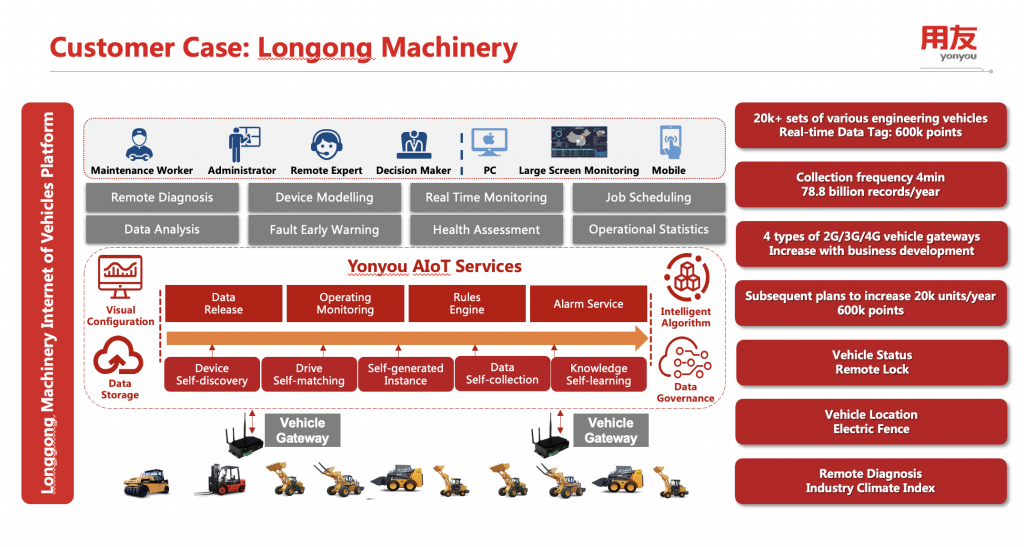
Key Application Value
- Real-time vehicle monitoring, vehicle maintenance, remote diagnosis and etc. are realized through AIoT services, equipment services, IoV technology and etc
- Connect 99 service sites, with 20,000 daily active vehicles, and an annual data volume of 78.8 billion
- From OT IoT to IT services, socialized collaboration has been realized
The value statement of service transformation
Today, more and more manufacturing enterprises seek to upgrade to service. Based on U9 cloud, on the basis of enterprise cloud and IoT integration, enterprises can realize business model innovation and transform from manufacturing to service.
Sources | McKinsey & Company; icloudnews; 21jingji.com