In this global pandemic, HRs from all over the world are facing the same problem-the management crisis brought about by the COVID-19. Recently, the Josh Bersin Academy had embarked on a project with MIT Sloan Management Review to find out what HR teams around the world are doing to respond to the COVID-19 crisis.
HR's Concerns
What HRs are most concerned about is how to deal with crises.
ServiceNow is the third-largest SaaS service provider in the world. In an interview with the head of HR mentioned that ServiceNow immediately formed a global response team (led by the CIO) at the beginning of the outbreak, and response fell into three urgent areas: communication, remote work, and reporting.
These measures solve the key problems encountered by employees while transitioning to a remote workplace. Employees worry that the pandemic will affect their career development in the company. The “Daily Crisis Standups” helps employees understand the real-time dynamic changes of their work content and responsibilities so that they will not feel confused and anxious because they do not understand the changes. At the same time, collecting work content information allows the company’s management to understand what key tasks are currently being carried out, and can objectively evaluate whether the work efficiency of remote office has declined.
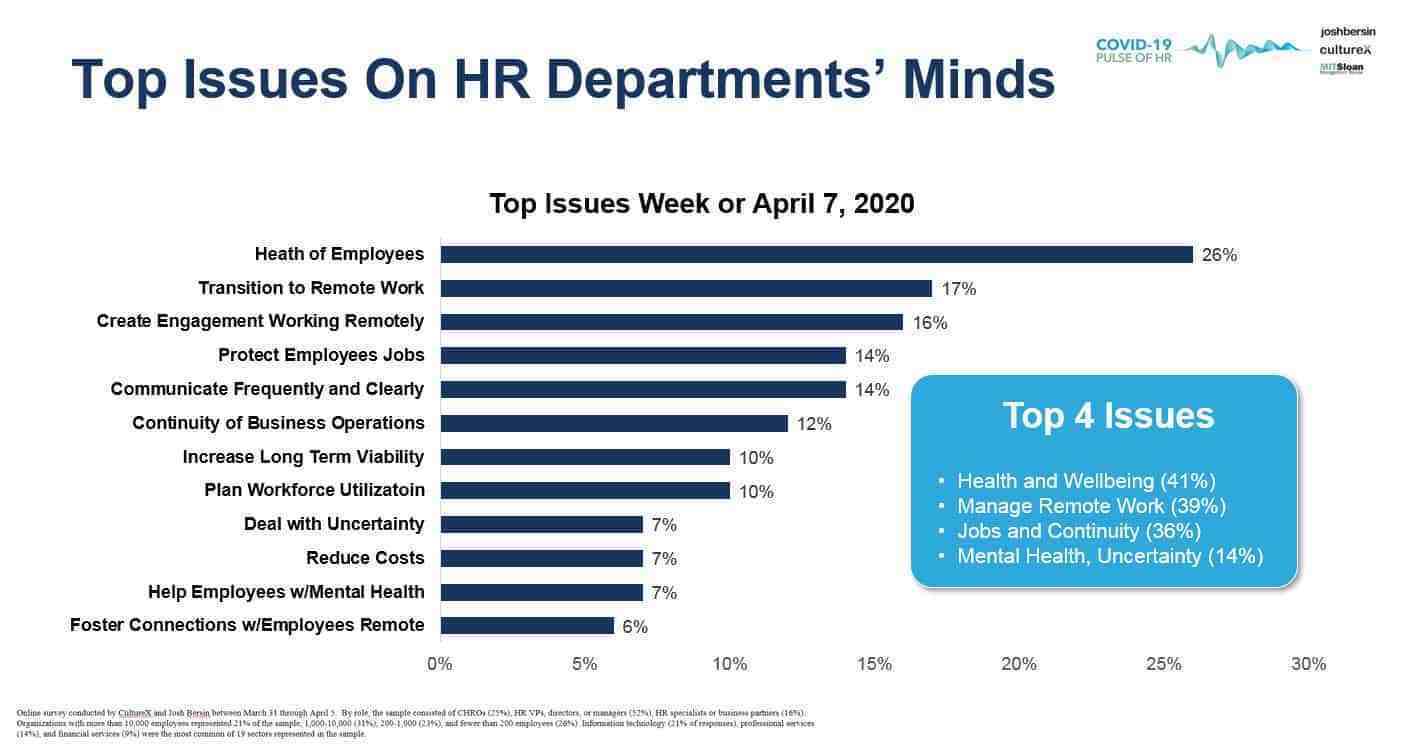
The Bersin agency had invited thousands of HR directors from all over the world to participate in a survey on the impact of the pandemic on HR work in March 2020, asking them their views on current events and the changes in their work. The statistical results are shown in the figure.
The transformation of human resources mainly focuses on four aspects: employee health & welfare, manage remote work, career development, and mental health. At the same time, attention to the family conditions and dealing with uncertainty are also areas of higher concern.
Unexpectedly that before this crisis, less than 50% of companies had remote work systems. Banks, regulated industries, and many financial companies did not practice work from home. Today, companies like Bank of America, Goldman Sachs, and others are rushing to formulate remote work strategies.
At the same time, a large number of companies focus on job movement and protection of the jobs. For example, the American Food Industry Association has launched a huge program to help companies in all aspects of foodservice and distribution realign the roles of their employees. Once the factories, restaurants, and venues are closed, the company can simultaneously adjust employees to new positions.
Another key issue is “continuity of operations.” Novartis and other pharmaceutical companies have made it clear that “crisis response” is not the only job of human resources. ServiceNow and other companies continue to recruit. Bersih survey does suggest this is the exception, rather than the rule; only 5% of HR Professionals anticipated their organization increasing its workforce in the wake of COVID.
Read More on Bersin Survey
What Measures Are Most Effective?
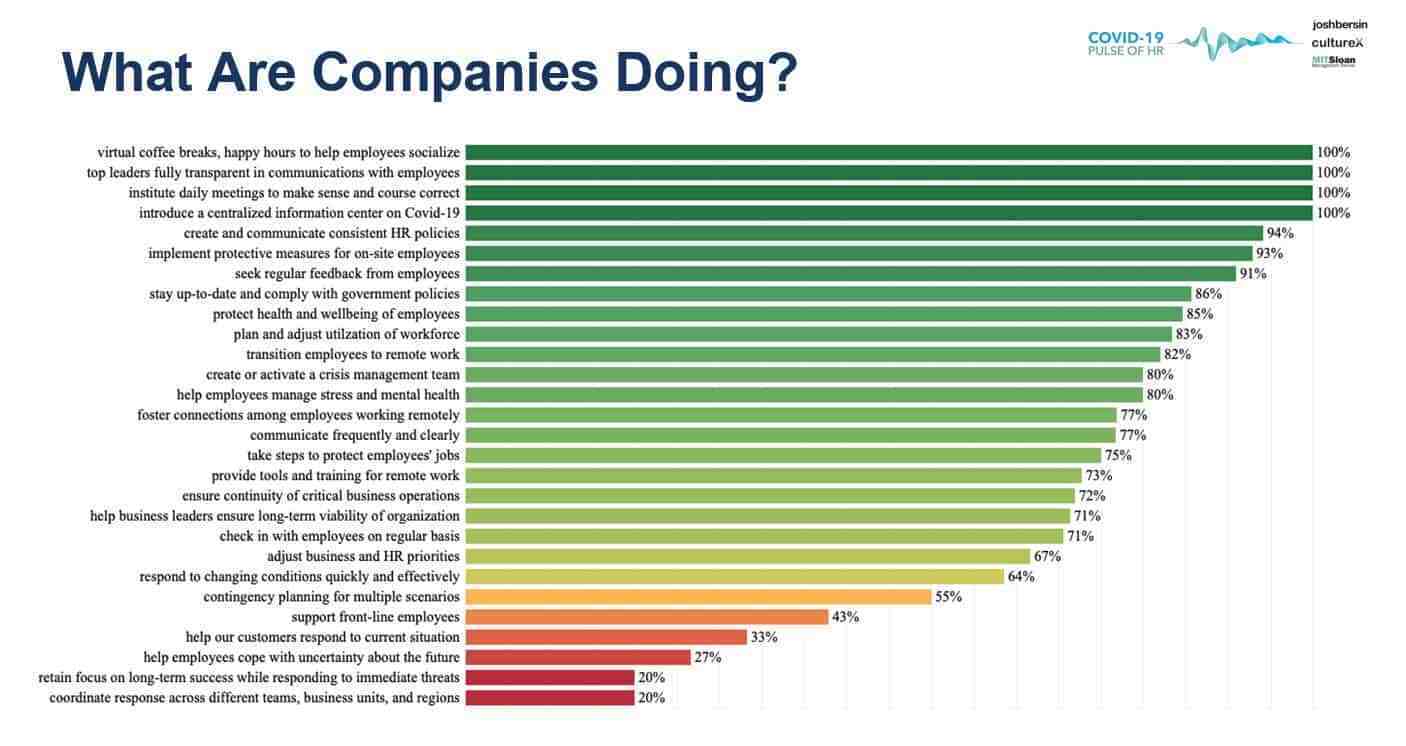
When asked “what measures are most effective”, we can find that communication, remote work, and ongoing health and welfare policies are high-scoring options. At the same time, we also noticed that more than 70% of companies have adjusted their human resource priorities.
What Companies Have Learned?
As shown in the figure, the high score option is internal communication, coordination, and quick response. Many HR teams are not built on an agile basis but designed with service delivery as the goal. In this crisis, HR had to immediately create a response team and mobilizing members of the local organization to work together with other regions around the world.
According to the data that local control and authority are the key to coping with the crisis. In military operations, the generals have realized that the decentralization of power and the distributed management model of regional autonomy are effective means to win the war. The human resources department is responding to this problem in the same way.
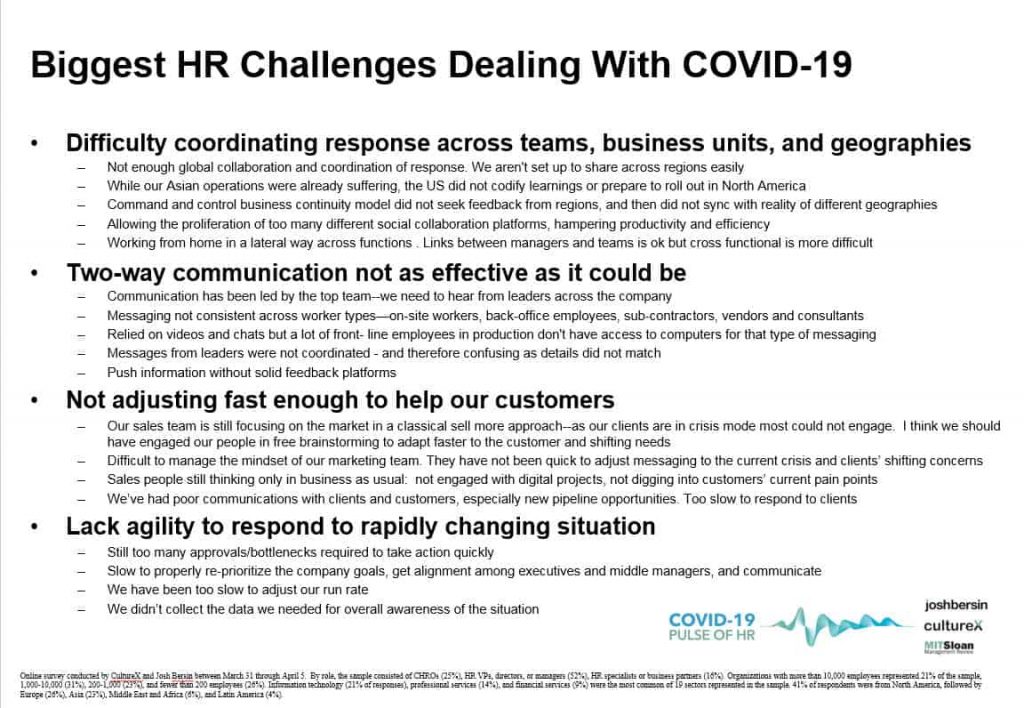
“People-oriented” is the consensus of global HR, and employee health is the most concerned part of global HR under the pandemic. At the same time, the influencing factors brought by the environment of employees are also taken into consideration by HRs such as where employees work, the country’s pandemic situation, where employees are currently located, the health status of employees’ family members, whether employees have elderly and children in need of care, etc., need to be counted so that the time and content of remote work can be arranged more reasonably.
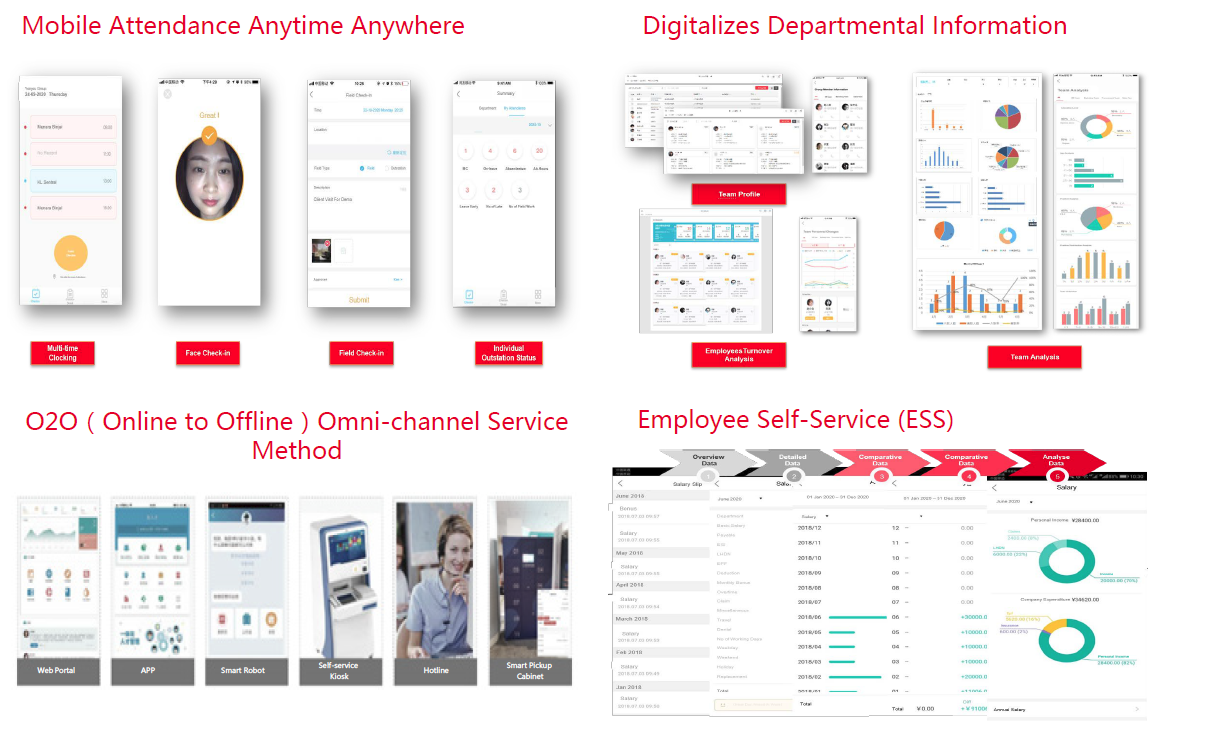
During the pandemic, Yonyou clients also used yonyou dHR solutions to built bridges with employees. The digital workbench creates a workplace with full participation and transparent collaboration for enterprises to improve employee self-drive and employee experience.
Yonyou NC Cloud | Enhance Employee Experience
Full-life-cycle, mobile, and intelligent employee services make people more closely connected with the organization, and comprehensively enhance employee experience and satisfaction.